


Okay, so check this out—Solana moves fast and explorers can lag behind.
Wow!
At first glance I only needed a transaction hash and a quick confirmation, but the reality is messier when you’re tracking NFTs or diagnosing failed swaps.
My instinct said “use any explorer,” and then I spent an afternoon frustrated—seriously.
Here’s the thing.
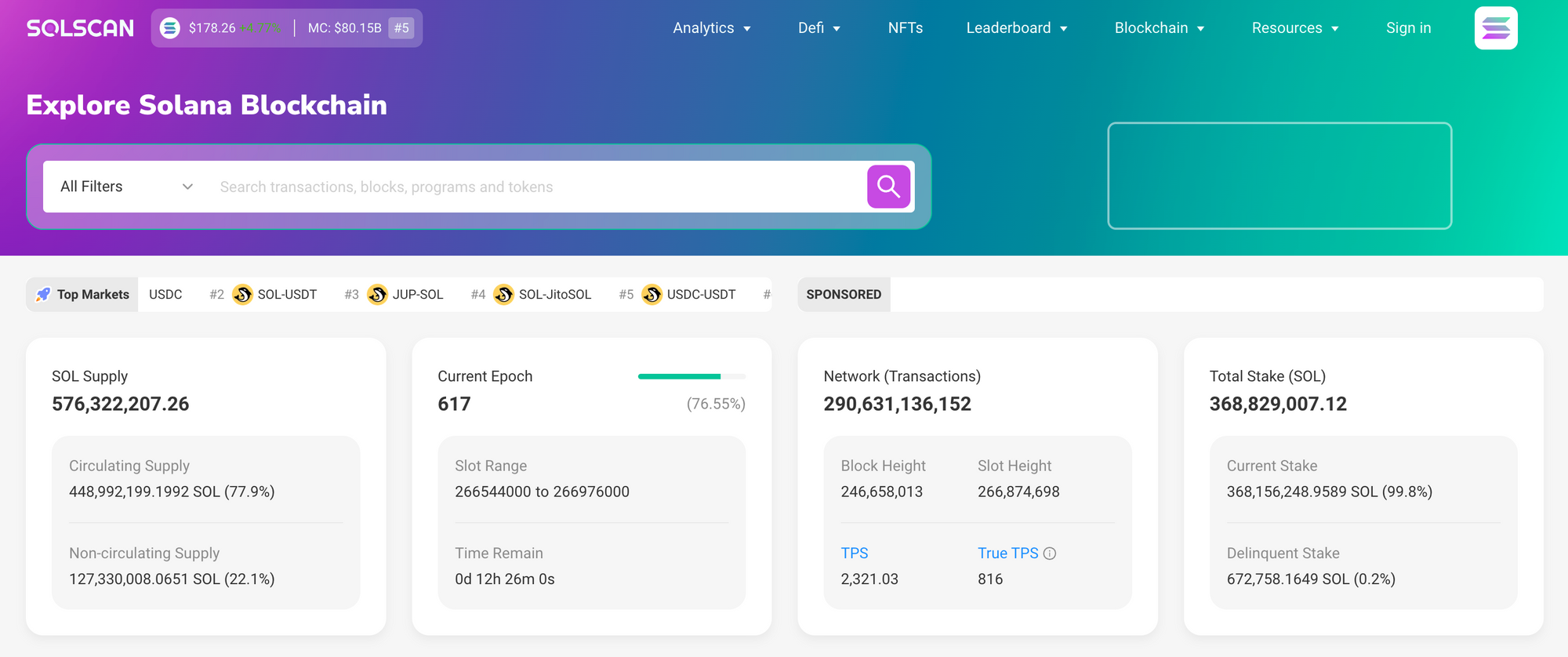
Solscan’s UI gives immediate context about accounts, token balances, and inner instructions in ways other tools skip.
I’ve tracked NFTs across marketplaces and seen metadata differences resolved faster there.
Initially I thought indexing on Solana was too inconsistent for reliable NFT history, but then I dug into how Solscan caches and reconciles confirmed blocks and that changed my view.
Here’s what bugs me about explorers: they hide inner instructions.
Whoa!
When you’re debugging a failed swap you want to see CPI calls, program logs, and rent exemptions without hunting through raw data.
Solscan surfaces those layers with filters and clear labels.
My method isn’t perfect—I’m biased toward fast, readable dashboards, very very much—but it saves time.
On one hand the explorer isn’t the only tool you need; though actually it reduces a lot of context switching for me.
Hmm…
Check this: the NFT tracker shows collection-level stats, rarity breakdowns, and quick links to holders, which is insanely helpful for quick due diligence.
Sometimes metadata is stale, and you must cross-check with creators or metadata servers.
I’m not 100% sure the rarity algorithm matches every marketplace, but it’s a solid starting point.
(oh, and by the way…) the explorer’s CSV export saved me when preparing airdrop lists.
Seriously?
Yes—because having a single place to query transaction traces, token movements, and historical ownership reduces errors and misattributions.
In practice you still cross-verify trades on marketplaces and sometimes hit RPC rate limits, but Solscan’s resilience is notable.
I’ll be honest, the mobile experience could be better, and somethin’ about clutter annoys me sometimes.
But overall, if you’re tracking NFTs or exploring Solana state, start at the solscan explorer official site and layer in other tools as needed.
How I use Solscan day-to-day
I usually begin with a quick transaction lookup, then jump to inner instruction traces if anything looks off, and finally export holder lists when I’m prepping a report—it’s a workflow that cuts down back-and-forth.
Sometimes I get thrown by RPC hiccups or metadata servers that lag, but having the explorer as a central reference point means fewer blind spots.
FAQ
Can Solscan track every NFT on Solana?
Mostly yes; it indexes a broad swath of collections and shows holder histories, but edge cases exist when metadata is hosted on unreliable endpoints or when new standards emerge—so double-check for high-stakes work.
Is Solscan free to use?
Yes, the basic explorer and NFT tracker functionality are free to use, though advanced features and heavy API usage may require different approaches (or external tooling) depending on your needs.